How to Request a White House Tour (and Get There on Tour Day)
A White House tour costs nothing, but it is never a walk-up attraction. Every public tour begins with a request filed weeks in advance through a congressional office, and the day itself runs on security timing that leaves very little room for a late arrival or a forgotten bag. Here is how the request process works, what tends to trip visitors up, and how to plan the trip to the checkpoint so you are standing in line when you are supposed to be.
Who Can Request a Tour, and Through Whom
Public tours of the White House are requested through your Member of Congress: your U.S. Representative or either of your two Senators. Each office has a tour coordinator, sometimes listed under constituent services, who submits requests to the White House Visitors Office on your behalf. You cannot book directly with the White House, and the National Park Service, which manages President's Park and its visitor center, does not schedule or ticket the tour either.
Visitors who are citizens of other countries use a different channel: their own embassy in Washington, DC, which can help submit a request. If you are traveling with a mixed group, such as American relatives hosting friends from abroad, ask the congressional office how they want foreign nationals in the party handled before you file. Every person on a request has to be submitted for security vetting, and the office will tell you exactly what details it needs.
The Request Window: 21 Days to About Three Months Out
Current guidance from the National Park Service and House.gov puts the window at no more than about three months (House.gov says 90 days) and no less than 21 days before the tour date. Requests are handled first come, first served, and space is limited, so the early end of that window is where you want to be, especially for spring break, cherry blossom season, the summer months and the December holiday decorations.
- File as soon as your travel dates are firm. Aim close to the start of the window rather than the 21-day cutoff.
- Offer several dates. Flexibility is the single biggest factor you control. A request for "any morning that week" has far better odds than one fixed date.
- Match names to IDs exactly. Submit each person's full legal name as it appears on the identification they will carry. A mismatch can hold up clearance or cost someone their place.
- Ask when you will hear back. Confirmations often arrive only a few weeks before the tour date, so do not assume a quiet inbox means a rejection.
A confirmation is not an ironclad guarantee. The official guidance warns that tours can be canceled at short notice because of the President's schedule, and the Visitors Office keeps a 24-hour information line for schedule changes. Check it the night before and again on the morning of your tour.
What the Tour Covers Now
The public tour is self-guided. You move at your own pace along a set route, with Secret Service officers stationed in each room who can answer questions about the art, furniture and history. The official tour page lists the State Floor rooms on the route, including the Blue Room, Red Room, Green Room, State Dining Room, Cross Hall and Entrance Hall.
The route itself changed recently. Public tours paused in the summer of 2025 during East Wing construction and resumed in December 2025 on an updated route that avoids the construction zone. Because the East Wing was where tour groups traditionally entered, older guidebooks and blog posts may describe an entrance and a route that no longer apply. Rely on the instructions in your confirmation and on whitehouse.gov/visit, not a printed guide, to find where to line up.
Tour-Day Timing
Tours generally run in the morning, Tuesday through Saturday, excluding federal holidays, with somewhat later end times on Fridays and Saturdays according to the official schedule. Your confirmation gives a specific time slot. Plan to reach the checkpoint well ahead of it. Screening moves at its own pace, and a missed slot usually cannot be rebooked on the spot.
Morning slots also collide with DC's rush hour. A 9 a.m. tour means driving in from Arlington, Alexandria or a Maryland suburb while commuter traffic is at its heaviest, and the blocks around the White House carry their own complications: streets close at short notice for security, many curb lanes are no-standing during rush hours, and the garages within easy walking distance fill early on weekdays. Build in more cushion than the map suggests, then a little more.
What to Bring, and What to Leave Behind
Every adult in your group should carry valid government-issued photo identification that matches the name submitted with the request. Foreign visitors typically need a passport. The confirmation and the official site spell out exactly which forms of ID are accepted, and it is worth reading that list rather than assuming.
The prohibited-items list is long and strictly enforced. It has historically excluded bags of nearly every kind, including backpacks, handbags and purses, along with food and drink, strollers, aerosols and sharp objects, and there are no lockers on site to check anything. Review the current list on whitehouse.gov before you leave your hotel, and treat anything not clearly allowed as a reason you could lose your slot or face a long walk back. Phones are generally permitted, and photography rules are posted along the route.
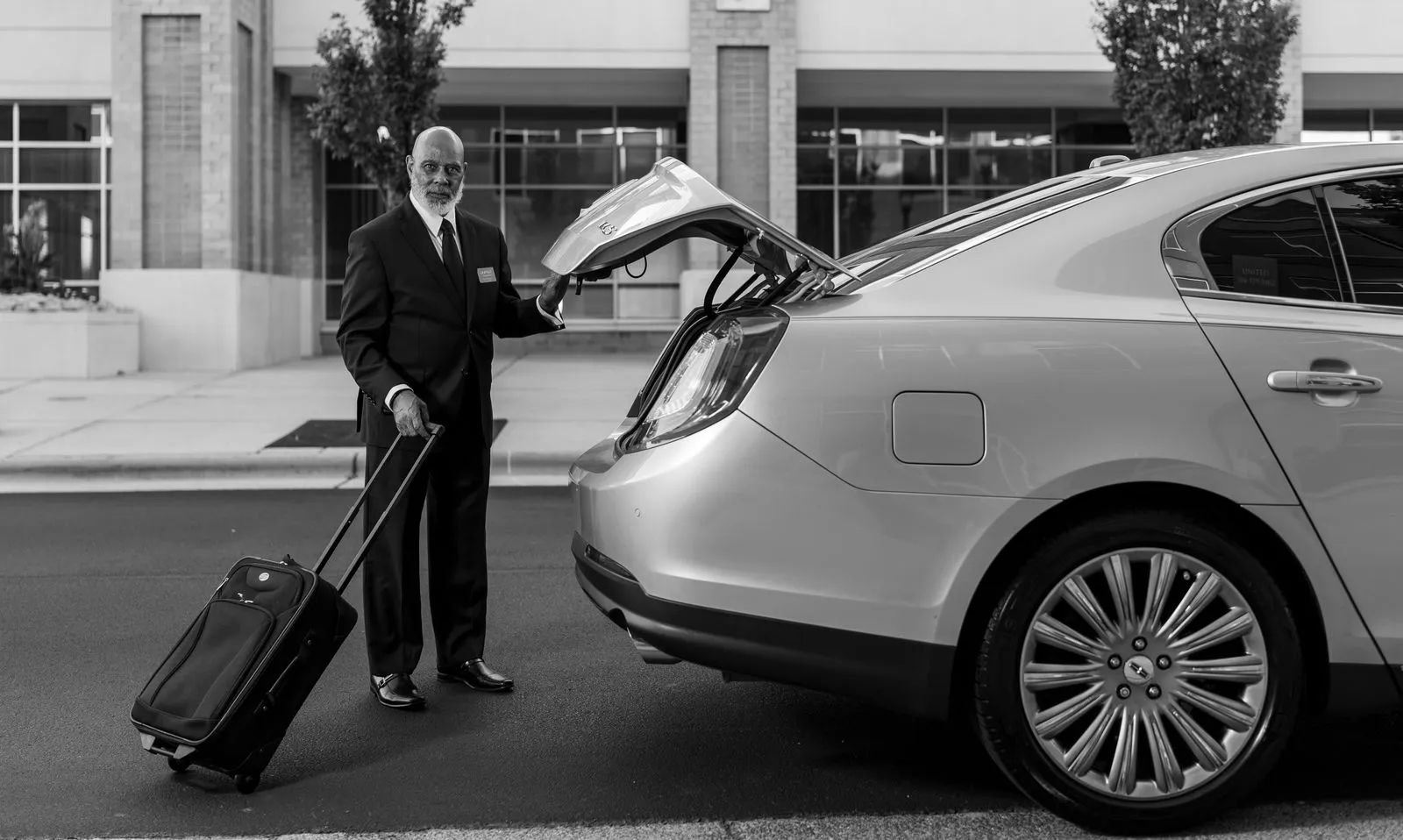
This is where having a vehicle nearby genuinely helps. Anything you cannot take inside, such as a handbag, a diaper bag or shopping from earlier in the morning, can stay with your chauffeur instead of forcing a choice between hauling it around all day and skipping the tour.
Getting Dropped Off Near the White House
No vehicle pulls up to the White House. Pennsylvania Avenue directly in front of the complex has been closed to traffic for decades, and the streets nearest the grounds, including stretches of E Street and the blocks around Lafayette Square, are subject to security closures that can change by the hour. In practice a drop-off means stopping at a legal curb a short walk away and covering the rest on foot.
An experienced DC chauffeur reads your entrance instructions, works out which side of the complex you need, and picks a curb that keeps the walk short. They then wait or circle nearby where standing is allowed rather than idling in a restricted lane. If a motorcade or a security event freezes nearby streets while you are inside, they move the pickup and text you the new spot so you are not wandering the perimeter looking for the car.
Building the Rest of the Day Around It
Because tours finish by late morning or early afternoon, most visitors pair one with the rest of President's Park and the monuments. The White House Visitor Center, in the Department of Commerce building on Pennsylvania Avenue, has exhibits on the house and its residents and does not require a tour reservation; check its current hours before planning around it. The Washington Monument and the World War II Memorial are a short walk south, the Renwick Gallery sits just west across 17th Street, and Penn Quarter's museums and lunch spots are a few minutes east by car.
For a full sightseeing day, our guide to the top things to do in Washington DC lays out how the major sites connect. If you want the vehicle with you from the White House to lunch to an afternoon museum, an hourly chauffeur booking keeps the same car and driver on call all day, with your bags and coats staying in the vehicle between stops. Lunch in Penn Quarter is an easy next stop, and the neighborhood's restaurants handle tour-day crowds well.
Planning the Ride
When you receive your confirmation, send us the time slot and the entrance instructions, and we will plan the pickup around rush-hour traffic and the current security picture near the White House. Call (877) 609-1919 or book online, whether you are coming from a DC hotel, a Virginia suburb or straight from a flight into Reagan National.
About Sarah Williams
DC-area travel writer covering airports, ground transportation, and business travel for over a decade.
Related Pages
Frequently Asked Questions
Can I book a White House tour directly with the White House?
No. Public tour requests are submitted through your Member of Congress (your Representative or one of your Senators). Citizens of other countries contact their embassy in Washington, DC for help submitting a request.
How far in advance should I request a White House tour?
Official guidance allows requests up to about three months (90 days) ahead and no later than 21 days before the tour date. Requests are first come, first served, so file early and offer several possible dates.
Can I bring a bag on the White House tour?
The prohibited-items list has historically excluded backpacks, handbags, purses, food, drink and strollers, and there are no lockers on site. Check the current list on whitehouse.gov and leave anything questionable at your hotel or in your vehicle.
Where is the White House tour entrance?
Follow the instructions in your confirmation and on whitehouse.gov/visit. The route was updated when tours resumed in December 2025 after East Wing construction began, so older guidebook directions may no longer apply.
What happens if my White House tour is canceled?
Tours can be canceled at short notice because of the official schedule. Check the Visitors Office 24-hour information line the night before and that morning, and ask your congressional tour coordinator about options if your date is canceled.
Recommended DCA Routes
Book Your DCA Airport Transfer
Flat-rate luxury chauffeur service with flight tracking and a guaranteed pickup. Reserve online or call us 24/7.