Seeing the Declaration and Constitution at the National Archives: A Visitor Guide
Few places in Washington feel as weighty as the Rotunda for the Charters of Freedom at the National Archives, where the original Declaration of Independence, Constitution and Bill of Rights are on public display. The visit itself can be short, but getting in at a busy time of year can take longer than the visit. This guide covers when to go, how entry and reservations work, what else is inside the building, and how to plan the blocks of Penn Quarter and the National Mall around it.
What You Will See in the Rotunda
The Rotunda is a dim, domed hall built specifically to display the nation's founding documents. The Declaration, the Constitution and the Bill of Rights sit in protective encasements around the room, under low light that slows the fading of the ink. Expect to see faint handwriting rather than the crisp text of a printed copy, especially on the Declaration, which shows its age more than the others. Large murals above the cases depict the delegates who drafted and signed them.
Visitors move past the cases in an orderly line, and staff keep it moving when crowds build. Many people spend only a few minutes at the documents, then linger in the room afterward. If you want a slower look, visit at a quieter hour, which makes a real difference here.
Entry, Reservations and Lines
Admission to the National Archives Museum is free. The visitor entrance is on Constitution Avenue at the corner of 9th Street NW, to the left of the large staircase, with a staffed, wheelchair-accessible entrance at the 7th Street corner. The Pennsylvania Avenue side of the building faces the Metro station, but visitors have to walk around to the Constitution Avenue side to get in.
The Archives encourages visitors to reserve a ticket ahead, offering both free general admission tickets and timed-entry tickets, and notes that without a timed-entry ticket the wait to get in can run an hour or more during heavy visitor periods. Ticketing has moved between platforms in recent years, so start from the Archives' own visitor site rather than an old bookmark, and check the current terms, including how far ahead you can book and whether same-day tickets remain.
- Busiest times: spring break, cherry blossom season, summer weekdays packed with school and family groups, and holiday weeks.
- Quieter times: often the first entry slots of the morning and late in the day, and weekdays outside the main tourist seasons.
- Security: every visitor goes through screening at the entrance, so allow time for it even with a timed ticket, and keep bags small.
Photography and Etiquette
The Archives has specific photography rules for its exhibit spaces, and the Rotunda is treated with particular care to protect the documents. Check the current photography policy on the Archives' website and follow the posted signs and staff instructions inside. Flash is the obvious thing to avoid around fragile parchment; beyond that, the rules have changed over the years, so do not assume what was allowed on a previous visit still is.
The room is quiet by design. Keep voices low, keep children close as the line moves, and step aside to read the interpretive panels so others can reach the cases.
More to See Inside
The Rotunda is the headline, but it is not the only exhibit. The museum's permanent and rotating galleries draw on the Archives' enormous holdings of federal records, from founding-era documents to photographs, maps, films and records that show how ordinary citizens have interacted with their government. The Public Vaults exhibit, designed to suggest the stacks where records are stored, is a good place for families who want something more hands-on after the hush of the Rotunda. Check the Archives' exhibits page to see what is on view during your visit.
If you are tracing family history, the Archives is also a working research institution, with research facilities that operate separately from the museum and have their own registration rules. Researchers should consult the Archives' research pages well before arriving.
Visiting with Children
The Rotunda's dim light and quiet line can be a lot to ask of young children, so set expectations before you go in: a short, special look at the real documents, then more active exhibits afterward. Older children and teens who have studied the Declaration or the Constitution in school often get the most from the visit. Keep the stop short, combine it with something outdoors, such as the Sculpture Garden across the street, and save longer exhibits for the kids who show interest.
Combining the Archives with Nearby Stops
The building sits between Constitution and Pennsylvania Avenues, which makes it an easy link between the National Mall and Penn Quarter. A few combinations that work well:
- The Mall side: the National Gallery of Art and its Sculpture Garden are directly across Constitution Avenue, and the National Museum of Natural History is a short walk west.
- The Penn Quarter side: the U.S. Navy Memorial sits on Pennsylvania Avenue above the Archives-Navy Memorial-Penn Quarter Metro station, and the neighborhood's museums, theaters and restaurants spread north from there.
- A history-themed day: pair the Archives with the Capitol and the Library of Congress, or with an evening performance at Ford's Theatre a few blocks north.
For families and student groups, our guide to tour-group transportation for the Smithsonian and the National Mall covers how to move a larger party between these sites without losing anyone.
Getting There and Parking
The Archives says plainly that there is no parking at the building. Metered street parking nearby has short time limits, and public garages are a few blocks away in Penn Quarter. On a busy weekday the hunt for a space can take longer than the Rotunda line. The Archives-Navy Memorial-Penn Quarter station on the Green and Yellow lines is across Pennsylvania Avenue, which works well if you are traveling light.
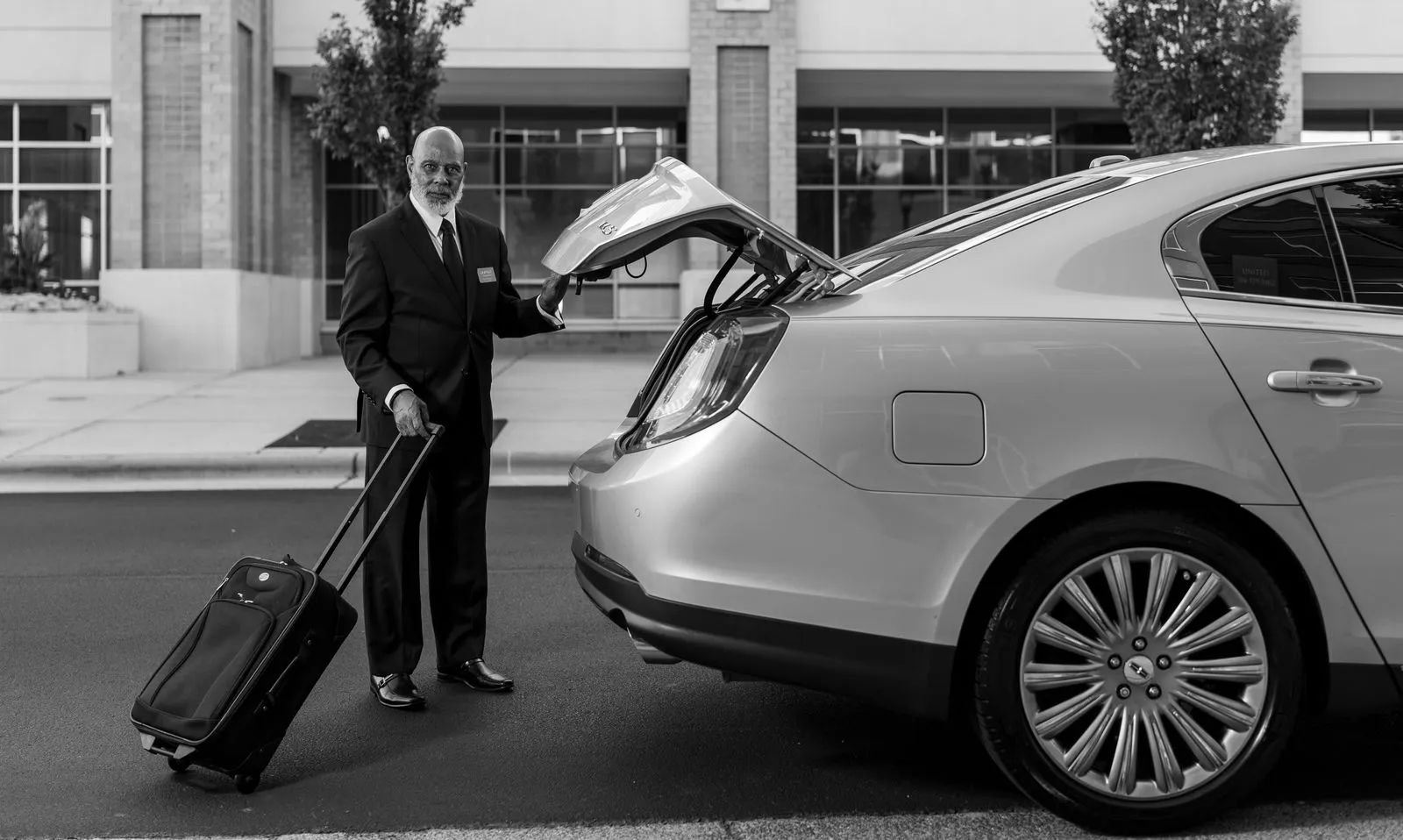
Constitution Avenue is a major east-west artery with heavy traffic and limited places to stop, so drop-offs are usually arranged on a nearby side street or a legal stretch of curb close to the 9th Street corner. With a chauffeur, you can be let out a short walk from the door and picked up at a pre-agreed spot afterward. For a day that strings together several museums and a meal, an hourly booking keeps the same car with you, and our Penn Quarter car service page covers the neighborhood itself.
Booking Your Visit
Tell us your Archives ticket time and the other stops you have planned, and we will build the day around traffic on Constitution Avenue and the closures that are common downtown. Call (877) 609-1919 or book online for a ride from your hotel, from Reagan National or from anywhere in the region.
About Sarah Williams
DC-area travel writer covering airports, ground transportation, and business travel for over a decade.
Related Pages
Frequently Asked Questions
Is the National Archives free to visit?
Yes, admission to the National Archives Museum is free. The Archives encourages reserving a ticket ahead and offers timed-entry tickets, which help you avoid long waits during busy seasons. Check its visitor site for current options.
Where is the visitor entrance to the National Archives?
On Constitution Avenue at 9th Street NW, to the left of the main staircase. A staffed wheelchair-accessible entrance is at the 7th Street corner. The Pennsylvania Avenue side faces the Metro but is not the visitor entrance.
How long does a National Archives visit take?
Passing the documents in the Rotunda can take only minutes, but entry lines can run an hour or more at peak times without a timed ticket. Allow extra time if you want to see the other galleries.
Can I take photos of the Declaration of Independence?
Photography rules in the exhibit spaces are set by the Archives and have changed over the years, with particular care in the Rotunda. Check the current policy online and follow posted signs and staff instructions.
Is there parking at the National Archives?
No. The Archives has no visitor parking; nearby metered spaces have short limits and garages are a few blocks away. A chauffeured drop-off near the 9th Street entrance avoids the search.
Recommended DCA Routes
Book Your DCA Airport Transfer
Flat-rate luxury chauffeur service with flight tracking and a guaranteed pickup. Reserve online or call us 24/7.