Law Firm & Lobbying Firm Client Transportation in Washington DC
Washington DC's law firms and lobbying firms operate in an industry where the client relationship is the entire business, and every touchpoint with a client — including the car that picks them up — reflects on the firm. Client transportation for this vertical is not the same problem as a general corporate travel account; it comes with its own expectations around discretion, billing structure, and the kind of reliability that a missed pickup can genuinely cost a relationship built over years.
Why This Vertical Has Its Own Standards
A K Street lobbying firm or a downtown law firm's client base often includes people for whom being seen matters as much as getting somewhere — corporate general counsel, association leadership, government officials, and high-net-worth individuals who expect the same polish from ground transportation that they expect from the firm's offices and its outside counsel network. A worn vehicle, a chauffeur unfamiliar with downtown DC's federal-building access rules, or a rideshare-style pickup experience undercuts an impression the firm has otherwise worked hard to build, regardless of how strong the legal or advocacy work itself is.
This is especially true for firms whose clients are themselves highly visible — publicly traded companies, trade associations, or individuals with a public profile — where a detail as small as the car waiting outside becomes part of how the relationship is perceived, fairly or not. Treating transportation as a genuine extension of client service, rather than an afterthought handled by whoever has a few minutes, is what separates firms that get this right.
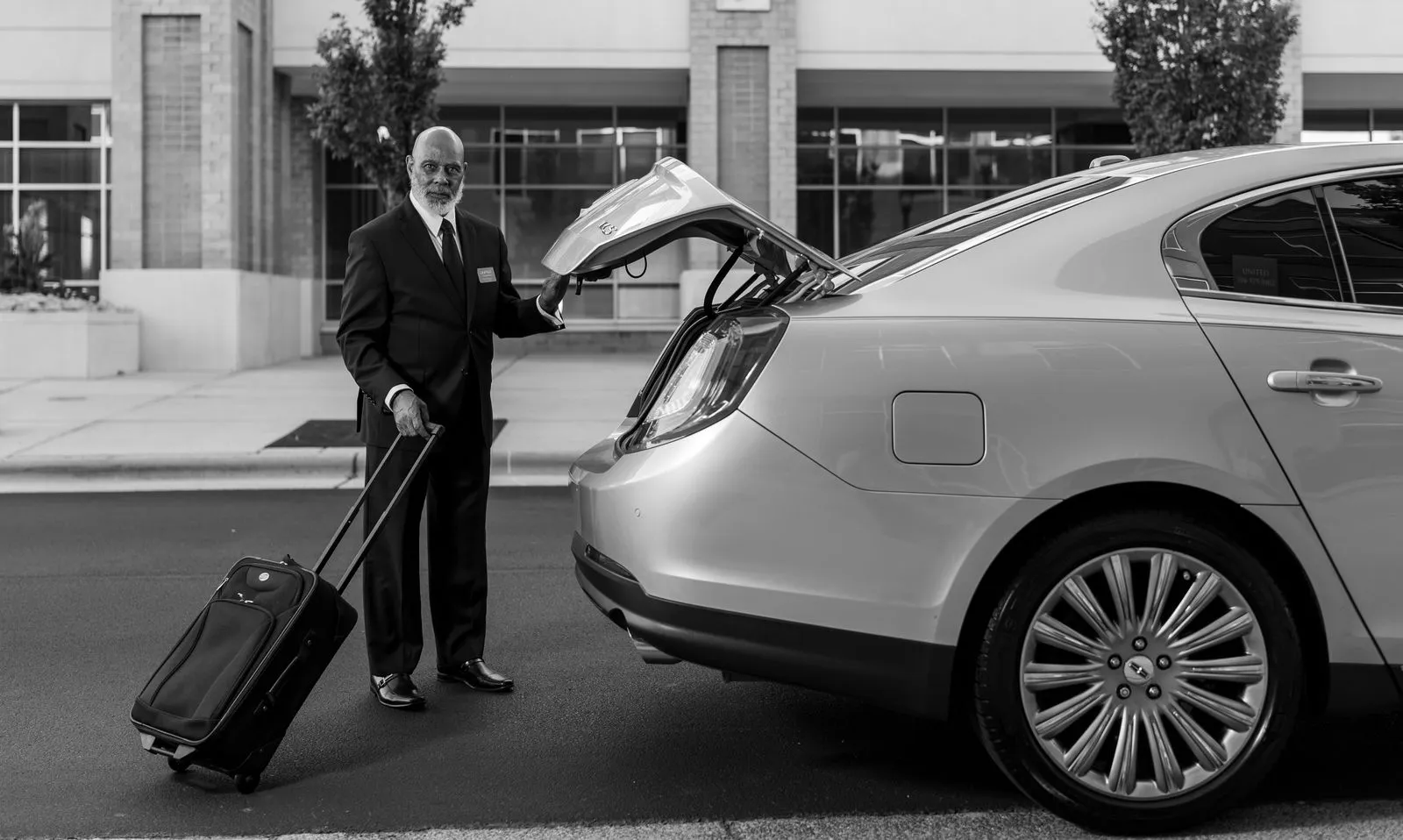
This standard extends to the small operational details that a client may never consciously notice but would certainly notice the absence of — a chauffeur who opens the door rather than waiting for a passenger to let themselves out, a vehicle that is spotless rather than merely clean, and a driver who dresses and carries himself in a way that would not look out of place walking into the firm’s own lobby. None of this is about formality for its own sake; it is about making sure the client’s entire experience of the firm, door to door, reflects the same standard the firm applies to its legal or advocacy work.
Firms with international clients face an additional version of this same standard. A visiting client from overseas, often unfamiliar with Washington and potentially navigating jet lag on top of a demanding meeting schedule, benefits from the same meet-and-greet and flight-tracking service used for any executive-level arrival, paired with a chauffeur who understands that this particular client’s comfort and confidence in the visit reflects directly on how the relationship with the firm develops going forward.
The same standard applies to how a firm’s own attorneys and lobbyists are transported, not just their clients, since a partner arriving to a client meeting in a worn or unreliable vehicle sends a quieter but still real signal about the firm’s attention to detail, even when the client never directly comments on it.
Confidentiality as a Baseline, Not an Add-On
Client meetings for law and lobbying firms frequently involve matters that are legally privileged, market-moving, or simply not ready for public knowledge, and the chauffeur transporting a client to or from those meetings is, by definition, in a position to overhear conversations or notice patterns worth noticing — which office a client visits, how long a meeting runs, who else was in the car. A professional car service built for this vertical treats confidentiality as a default expectation rather than a special request: trip details, pickup locations, and any overheard conversation stay between the chauffeur and dispatch, full stop, the same standard a firm would expect from any other vendor with access to sensitive information.
This matters even more for lobbying firms specifically, where a client’s advocacy strategy — which offices they are visiting, in what order, and how often — can itself be sensitive competitive information if it becomes known to opposing interests before a campaign is public. A chauffeur who simply drives the route without commenting on it, keeping no informal record of where a client goes or how frequently, is providing a genuinely valuable service beyond just the ride itself.
Firms handling particularly sensitive matters — a high-profile litigation, a contested regulatory matter, a client whose name itself cannot be disclosed publicly — sometimes request an additional layer of discretion, such as using a generic pickup name rather than the client’s actual name, or avoiding vehicles with any visible branding. A transportation provider used to this vertical should be able to accommodate these requests without treating them as unusual.
Some firms formalize this expectation with a written confidentiality acknowledgment from their transportation vendor, similar to what they might require from any other outside service provider with access to client information, and a reputable car service should be comfortable signing such an agreement without hesitation.
Court Appearances, Depositions, and Hearing-Day Logistics
A litigation team with a court appearance, a deposition schedule, or a filing deadline runs on a timeline that has essentially zero tolerance for a late or cancelled ride — a missed federal courthouse appearance is not a minor inconvenience, it is a real professional and sometimes legal problem. A reserved car service with flight tracking for out-of-town co-counsel or expert witnesses, and a confirmed pickup time for local court days, removes transportation as a variable on days when every other variable is already tightly controlled by opposing counsel, the court's own schedule, or a filing deadline that will not move.
Depositions in particular often run long or get rescheduled mid-day, and hourly as-directed service handles that far better than a fixed pickup time, since the chauffeur simply stays with the timeline as it actually unfolds rather than forcing a new booking every time a deposition runs an extra hour.
Out-of-town litigation support adds another layer worth planning for specifically. A case with co-counsel or expert witnesses flying in from other cities for a trial or a multi-day hearing benefits from the same flight-tracked reliability used for any executive travel, coordinated alongside the local team’s court-day transportation so that every participant in the case arrives on the same predictable schedule regardless of where they are traveling from.
Multi-city litigation teams add their own wrinkle, since a case with hearings or depositions spread across DC, Virginia and Maryland courts within the same week benefits from a single transportation provider who can coordinate across all three jurisdictions rather than a firm needing to find and vet a separate local vendor in each location.
Jury trials in particular can run for days or weeks with a schedule that shifts daily based on the court’s calendar, and a standing arrangement for the duration of a trial — rather than booking fresh each morning — gives a litigation team one less thing to manage during an already demanding stretch.
Billing That Matches How Firms Actually Operate
Law firms and lobbying firms typically need transportation costs tied to a specific matter or client for billing purposes, not a generic monthly invoice that has to be manually allocated after the fact. A corporate account structured around matter-level detail on each trip — date, client, purpose — saves a firm's billing department real time reconciling transportation against client invoices, and it is a genuinely different setup from a standard corporate travel account built for a single company's internal staff. This matters at firms of any size, but it becomes especially valuable once a firm is running dozens of client matters simultaneously, each with its own billing rules and client expectations.
See our Washington DC corporate car service page for standard vehicle and chauffeur options, and our Capitol Hill meeting day guide for the specific logistics of a Hill-facing advocacy day, which is a related but distinct booking pattern from client-facing legal transportation.
For firms that bill clients directly for transportation as a reimbursable expense, having an itemized, matter-coded record readily available also simplifies the client invoicing process considerably, removing the need for an associate or paralegal to manually track down and allocate a general transportation bill after the fact. This kind of administrative simplicity is a small thing on any single trip, but it adds up across a firm handling dozens of active matters at once.
It is also worth setting up a standing account before the first trip is actually needed, rather than scrambling to arrange transportation the same week a new matter suddenly requires it — an established account with a car service, the same way a firm maintains relationships with a court reporter or a process server, means the transportation piece is simply ready whenever a new matter calls for it.
Firms that bill by the hour also appreciate transportation records that clearly separate travel time from billable work time, since a client should never be charged attorney hourly rates for time spent simply riding in a car, and clean, itemized transportation records help keep that distinction unambiguous on an invoice.
The Bottom Line
For a law firm or lobbying firm, client transportation is part of the client experience, not a logistics afterthought. DCA airport corporate car service covers the airport leg for visiting co-counsel or clients, and a direct-billed account keeps every trip tied cleanly to the matter it belongs to. Set up a firm account here or call (877) 609-1919.
About Sarah Williams
Executive travel consultant specializing in ground transportation for corporate and government clients across the DMV.
Frequently Asked Questions
How is client transportation different for law and lobbying firms compared to standard corporate travel?
It carries a higher baseline expectation for discretion and polish, since the chauffeur is often the client’s first and last touchpoint of a visit, and billing typically needs to be tied to a specific matter or client rather than a general monthly invoice.
Are conversations and trip details kept confidential?
Yes. Confidentiality is treated as a default standard for this kind of account — trip details and anything overheard during a ride stay between the chauffeur and dispatch, not shared or logged casually.
Can transportation be booked around a court appearance or deposition schedule?
Yes. A confirmed pickup time for local court days, plus flight tracking for out-of-town co-counsel or expert witnesses, removes transportation as a variable on a day with essentially no room for delay.
Can billing be broken down by matter or client?
Yes, a corporate account can be structured to tie each trip’s billing detail to a specific matter, which saves a firm’s billing department time reconciling transportation costs against client invoices.
What vehicle is standard for law firm and lobbying firm client pickups?
A luxury sedan is standard for most single-client pickups, with an SUV available for a small visiting team or when the client is traveling with significant materials or luggage.
Recommended DCA Routes
Book Your DCA Airport Transfer
Flat-rate luxury chauffeur service with flight tracking and a guaranteed pickup. Reserve online or call us 24/7.