Motorcades, Road Closures and Security Zones: Why DC Routes Change Without Warning
Every city has traffic. Washington also has motorcades, security perimeters, state visits, permitted marches and federal events that can close a road with almost no public notice, sometimes for ten minutes and sometimes for days. Visitors usually discover this when their navigation app shows a clear route and the street ahead is blocked by police cruisers. This explainer covers why DC routes change so suddenly, which kinds of closures you can plan around, and how professional chauffeurs build trips that still arrive on time.
How a Motorcade Closure Actually Works
When the President, the Vice President or a visiting head of state moves by road, police close the route ahead of the motorcade in a rolling pattern. Officers on motorcycles and in cruisers block cross streets and highway ramps shortly before the convoy arrives, hold traffic until it passes, then reopen behind it. To a driver caught at an intersection it looks like a random hold; in reality it is a moving bubble that sweeps along the route.
The length of the hold varies. A short downtown movement may stop you for a few minutes. A longer movement, such as a trip out to a military airfield or along a parkway, can close entire highway segments and on-ramps while the convoy travels, and the backups linger well after the road reopens. Routes and timing are not published in advance for obvious security reasons, so nobody, including professional drivers, gets a schedule.
Planned Events: The Closures You Can See Coming
Not every closure is a surprise. Many are announced, and the trick is knowing to look for them.
- National Special Security Events. The Department of Homeland Security designates certain events, such as presidential inaugurations, State of the Union addresses and some state funerals and summits, as NSSEs, with the U.S. Secret Service leading security. These bring fencing, vehicle checkpoints, street closures and sometimes Metro station closures, usually announced in the days before.
- State and official visits. Foreign leaders' visits bring motorcades between the White House, the State Department, hotels and embassies, often several times a day.
- Permitted demonstrations and marches. Large gatherings on the National Mall and along Pennsylvania Avenue require permits, and the Metropolitan Police Department typically announces associated street closures.
- Races, parades and festivals. Running events, holiday parades and street festivals close routes for a morning or a full day.
- Sports and concerts. Games at Nationals Park, Capital One Arena and Audi Field do not close roads outright but can lock up the surrounding blocks before and after events.
We have written separately about the biggest planned events, including inauguration and transition periods and rally and march days on the National Mall, where the closures are extensive and run for many hours.
Permanent Security Zones
Some closures never lift. Pennsylvania Avenue directly in front of the White House has been closed to vehicles for decades, and many streets around the Capitol complex, federal agency headquarters and other sensitive buildings carry permanent barriers, checkpoints or restrictions on which vehicles may enter. Navigation apps generally know about these, but drop-off pins placed right at a building's front door often land inside a zone a car cannot reach.
Around embassies and international organizations, temporary security measures can also appear during high-profile visits or meetings, adding barriers to otherwise ordinary residential streets in neighborhoods such as Kalorama or Foggy Bottom.
Why Rideshare Pickups Struggle Most
A rideshare driver sees your pin, follows the app, and drives toward it. When a rolling closure or a security perimeter cuts across that route, the app's fastest-path logic can send the driver around the block repeatedly, or toward the same blocked street from a different direction. Meanwhile you are standing at a pin that may be inside a pedestrian-only area. The driver often does not know the city's closure patterns well enough to suggest a better meeting spot, and canceling and rebooking puts you back at the start of the queue.
That does not make rideshare useless in DC. It means it is least reliable at exactly the moments when timing matters most: getting to a scheduled tour, a hearing, a dinner reservation or a flight while something is happening downtown.
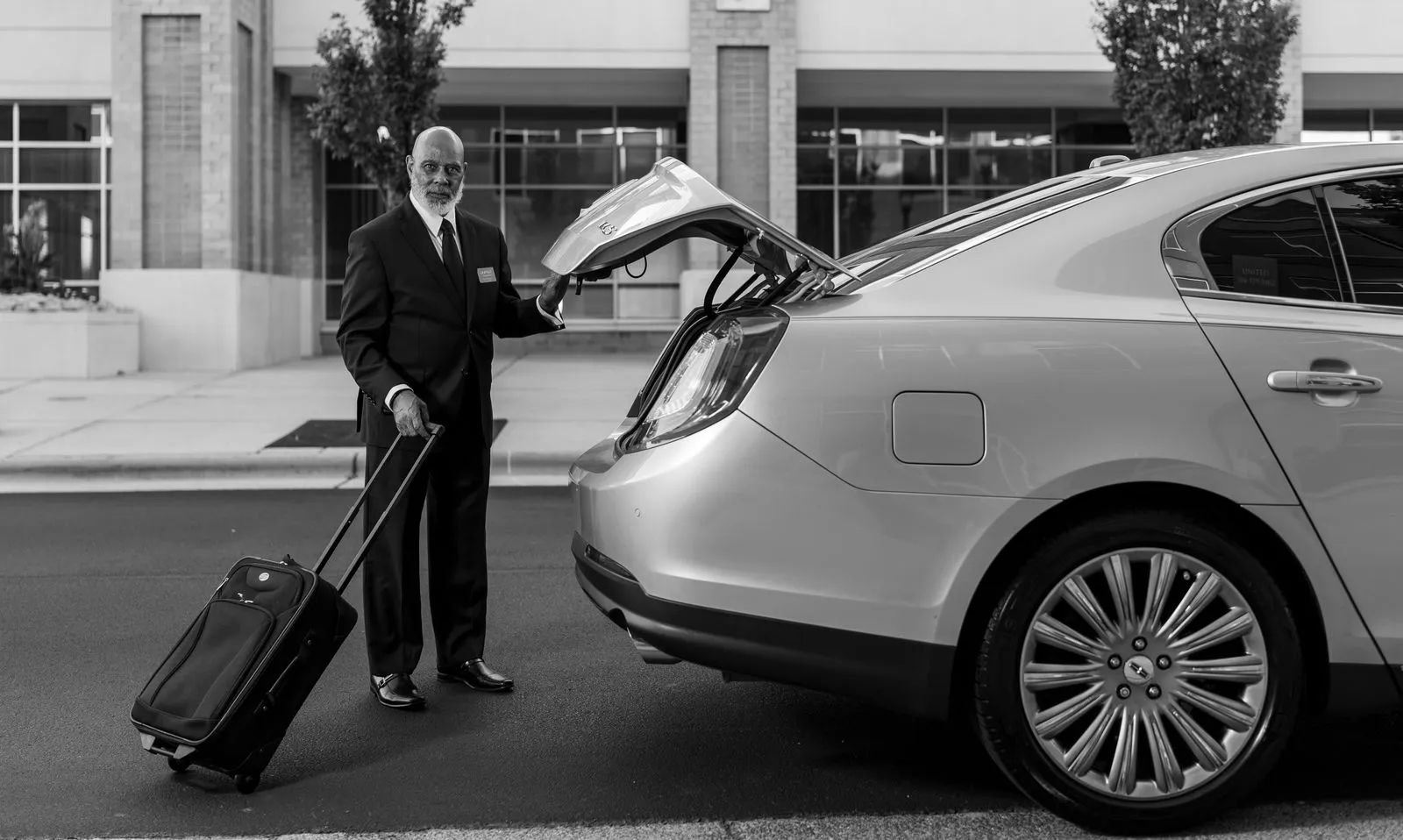
How Chauffeurs Plan Around It
Professional drivers cannot see the Secret Service's plans either. What they can do is plan routes that survive surprises:
- Buffers on time-critical trips. A departure for a flight out of Reagan National, a scheduled meeting or a timed entry gets extra cushion on days when a state visit, a major summit or a large march is on the calendar.
- Alternate crossings. Between Virginia and the District there are several Potomac crossings, including the 14th Street bridges, Arlington Memorial Bridge, the Roosevelt Bridge and Key Bridge. When one approach backs up, a driver who knows the others can reroute rather than wait.
- Off-pin meeting points. Instead of the front door of a building inside a perimeter, a chauffeur arranges a nearby corner or side street outside the barriers and texts you the exact spot.
- Live information. Police and transportation alerts, dispatch communication and what drivers are seeing on the ground all feed the decision on which way to go.
For business travelers with tight schedules, our Washington DC corporate car service builds this planning into every booking, and an hourly as-directed arrangement means the car stays close by instead of having to fight its way back to you.
What You Can Do as a Visitor
- Check announced closures. Before an important day, look at the Metropolitan Police Department's traffic advisories and the news for anything scheduled, especially near the White House, the Capitol and the National Mall.
- Sign up for official alerts. The District's AlertDC service pushes emergency and major disruption notices.
- Leave earlier than the app suggests for anything with a fixed start time, particularly when crossing downtown.
- Pick a meeting spot outside the perimeter for pickups after events, and share it with your driver in advance.
- Be patient at a hold. A motorcade hold usually clears within minutes; turning around in traffic often takes longer than waiting.
Airport Trips During Major Events
The ride from downtown to Reagan National is short on paper, and most of the time it is. On days with a major event downtown, though, the approaches to the 14th Street bridges and the George Washington Memorial Parkway can slow well beyond normal rush-hour patterns. Arrivals are less of a concern, since your chauffeur tracks your flight and is already staged at DCA, but the drive from the airport into the District can take longer. Our DCA to Washington DC page covers the standard routes into the city.
Planning a Trip During a Busy Week
If you know you will be in town during a state visit, a summit or a major demonstration, tell us when you book. We will build realistic timing around the closures we know about and keep enough slack for the ones nobody announces. Call (877) 609-1919 or book online.
About David Thompson
Ground transportation specialist covering the DC, Maryland, and Virginia corridor for business and leisure travelers.
Related Pages
Frequently Asked Questions
Why are DC roads suddenly closed?
Often because of a motorcade: police close cross streets and ramps just ahead of the convoy, then reopen them behind it. Other causes include state visits, permitted marches, races, and security events designated by federal authorities.
How long does a motorcade closure last?
A short downtown movement may hold traffic for a few minutes; longer movements along parkways or highways can close larger segments while the convoy passes. Backups can linger after the road reopens.
Are motorcade routes announced in advance?
No. Routes and timing are not published for security reasons. Planned events such as inaugurations, marches and races usually have announced street closures; check Metropolitan Police Department advisories.
What is a National Special Security Event?
An event designated by the Department of Homeland Security, such as an inauguration or a State of the Union address, for which the U.S. Secret Service leads security. Expect fencing, checkpoints and street closures.
How do chauffeurs handle DC road closures?
They add time buffers on busy days, know alternate Potomac crossings, choose meeting points outside security perimeters, and use live alerts and dispatch updates to reroute rather than wait.
Recommended DCA Routes
Book Your DCA Airport Transfer
Flat-rate luxury chauffeur service with flight tracking and a guaranteed pickup. Reserve online or call us 24/7.