College Move-In Day Transportation: Georgetown, GW & American University
Every August, DC-area universities — Georgetown, George Washington, American University, and others — welcome a new class of students within the same compressed few days, and move-in morning at each campus concentrates an enormous amount of vehicle traffic, luggage, and family stress into a few narrow hours. It is, in its own way, the opposite bookend of the graduation-season crowds covered elsewhere on this site, and it comes with its own specific transportation planning worth doing ahead of time.
Why Move-In Day Traffic Is Its Own Problem
Unlike graduation, which draws crowds to a single ceremony at a single time, move-in day spreads chaos across an entire morning as hundreds of families arrive within staggered but overlapping windows, each hauling a car's worth of belongings to a dorm that was not built with modern move-in volume in mind. Campus staff typically assign narrow drop-off windows by building or floor, and missing your window can mean circling the block, or the neighborhood, waiting for a new slot to open — a genuinely stressful way to start a student's college experience.
The volume problem compounds because move-in usually happens over just one or two days for an entire incoming class, rather than being spread across a week, which means the surrounding neighborhood absorbs a semester's worth of moving traffic in a single compressed burst.
The emotional weight of the day adds its own layer of stress on top of the logistics. Parents saying goodbye to a first-year student for the first time are often managing real emotion alongside the practical task of unloading a car, and a smooth, unhurried transportation experience — rather than one more thing going wrong on an already overwhelming morning — genuinely changes how the day feels for the whole family, not just how efficiently it runs.
Weather adds its own complication to an already tight morning, since a hot, humid late-August day — common in DC during move-in season — makes the whole process considerably more exhausting for a family managing boxes and furniture, and it is one more reason a smooth, waiting-free drop-off matters more on this particular day than it might for an ordinary campus visit.
Returning upperclassmen moving into off-campus housing around the same week add another layer of citywide moving traffic that compounds the first-year move-in crush, particularly in neighborhoods with a heavy concentration of student housing near several of these universities.
Even families who have been through this process with an older child at the same school often find each year brings slightly different logistics, since campus procedures do shift from year to year.
Campus-Specific Move-In Challenges
Georgetown's hilltop campus sits inside a residential neighborhood with notoriously tight, narrow streets that were never built for a coordinated fleet of moving vehicles, and neighbors' patience for move-in week traffic runs thin by the second day. GW's dense downtown Foggy Bottom location has essentially no on-campus parking to speak of, pushing most families toward a curbside drop-and-go rather than an extended unload. American University's more suburban Ward Circle-area campus has more room to work with but still sees serious congestion during peak move-in hours.
A driver or service familiar with each campus's actual functioning drop-off points — not just the official campus map — makes a meaningful difference on the day itself, since the printed move-in instructions rarely capture which side street actually flows and which one backs up within the first hour.
It is also worth checking each university’s specific move-in day communications in the weeks beforehand, since assigned drop-off windows, building-specific loading zones, and any restrictions on vehicle size can change from year to year as each campus adjusts its process based on the previous year’s bottlenecks. Sharing these specific instructions with your transportation provider ahead of the day, rather than assuming general familiarity with the campus is enough, keeps the actual drop-off aligned with whatever that year’s official process requires.
Smaller DC-area schools and graduate programs, while drawing less citywide attention than the major undergraduate move-in days, follow the same basic pattern on a smaller scale, and a family moving a graduate student into off-campus housing near one of these programs still benefits from many of the same considerations — confirming parking realities and realistic drop-off logistics before the day itself rather than assuming they will simply work themselves out.
Some campuses have shifted in recent years toward staggered, appointment-based move-in scheduling specifically to reduce this congestion, and confirming your family’s exact assigned window well ahead of the day — rather than assuming a general morning arrival will work — avoids arriving outside your slot and being asked to wait.
Checking the university’s official move-in communications the week of, rather than relying on information from a previous year, ensures your family is working from the most current instructions.
Flying Students In From Out of State
A significant share of DC-area university students arrive from out of state, often flying in with family for move-in weekend rather than driving. Coordinating a flight-tracked pickup from DCA, Dulles, or BWI directly to campus — sized appropriately for a family plus the inevitable extra luggage a new student brings — removes one layer of stress from a day that already has plenty. Families flying in specifically for the weekend can review DCA to Washington DC for typical transfer pricing into the district.
International students starting at a DC-area university face an even more compressed version of this same challenge, often arriving on a long-haul flight with jet lag, unfamiliar with the city, and managing significantly more luggage than a domestic student typically brings for a first semester. A meet-and-greet service at the arrival gate, paired with a direct transfer to campus, removes a considerable amount of stress from what is already a disorienting first day in a new country.
Students bringing along a significant amount of dorm furnishings and electronics — more than a typical carry-on and checked bag allowance covers — sometimes ship items ahead separately, which then requires a second pickup or delivery coordination on move-in day itself, worth mentioning to your transportation provider if it applies to your family’s plan.
Families flying in the evening before move-in day, rather than the morning of, generally find the whole process considerably less rushed, since it removes any risk of a delayed flight colliding directly with a tightly assigned move-in window the next morning.
Confirming baggage allowances with the airline ahead of time also avoids a surprise fee at the airport on top of an already logistics-heavy travel day.
The Unload-and-Park Problem, Solved Differently
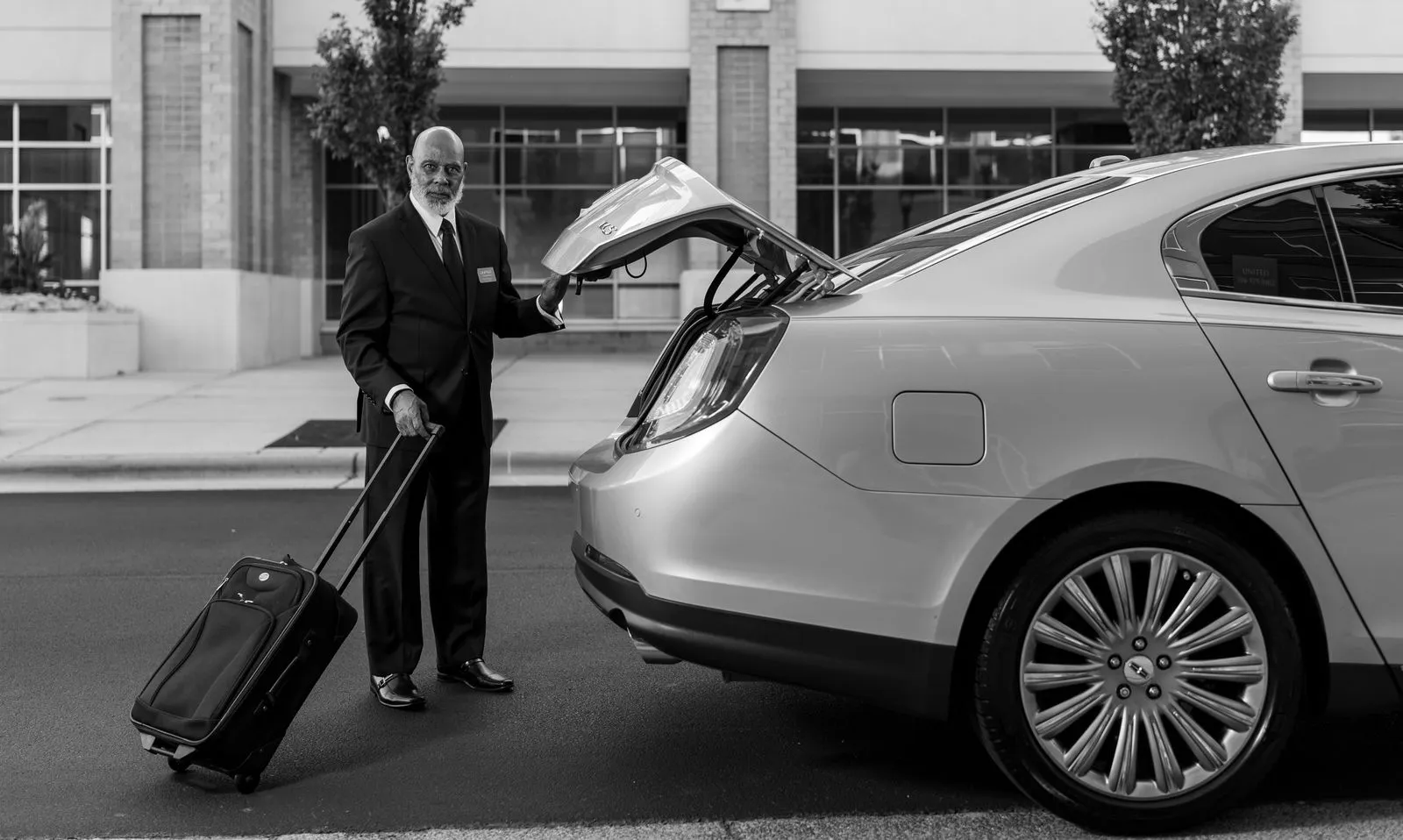
The classic move-in day bottleneck is not the drive to campus — it is what happens after: someone has to park the car, often blocks away given how little parking exists near any of these campuses, while the rest of the family manages the actual unload. A chauffeured drop-off sidesteps this entirely, since the vehicle handles its own departure rather than needing a family member to peel off and search for parking mid-unload, letting the whole family focus on getting a student settled instead of splitting attention between boxes and a parking spot.
Move-in day is usually just the first of several DC visits a family makes over four years — Family Weekend each fall, holiday pickups and drop-offs, and eventually the reverse version of this same problem at graduation. Our college graduation season transportation guide covers the other bookend of the same four-year cycle, and our Sprinter van guide for family groups covers the vehicle logic for larger extended-family visits.
Siblings along for the move-in trip benefit from this arrangement as well, since a family traveling with younger children has one less thing to manage — no need to keep track of kids near a busy unloading zone while also hauling boxes, since the vehicle itself is not something anyone in the family needs to actively manage once the drop-off is complete.
Once the unload itself is complete, many families also want time afterward for a first look around the dorm room, a campus tour, or a final meal together before saying goodbye, and a chauffeur available on an hourly basis for the full morning — rather than a single point-to-point drop-off — accommodates this fuller version of the day without a second booking needed.
A short stop for last-minute dorm supplies on the way to campus — a nearby pharmacy or big-box store — is a common addition to move-in day, and building this into the transportation plan in advance saves a separate, harder-to-arrange errand later in the day once the family is already settled into an unfamiliar city.
A few extra minutes built into the schedule for a final family photo outside the dorm is a small but meaningful addition many families appreciate having time for.
The Bottom Line
Move-in day is a genuinely stressful, tightly compressed morning at every DC-area campus, and the families who handle it most smoothly are usually the ones who removed the parking-and-unload problem from the equation ahead of time. Book your move-in day transportation here or call (877) 609-1919.
About Michael Chen
Transportation industry analyst and frequent DC-area business traveler with 15+ years in executive travel logistics.
Frequently Asked Questions
Which DC-area campuses have the toughest move-in day logistics?
Georgetown’s hilltop campus sits within a tight-streeted residential neighborhood with little tolerance for traffic, and GW’s downtown Foggy Bottom campus has essentially no on-site parking, making both especially difficult for families driving and parking themselves.
Can a car service pick up a student flying in for move-in weekend?
Yes. A flight-tracked pickup from DCA, Dulles or BWI can be sized for a family plus extra luggage and taken directly to campus for the assigned move-in window.
What is the biggest advantage of a chauffeured move-in day drop-off?
It removes the classic bottleneck of someone needing to peel off and park the car, often blocks away, while the rest of the family manages the unload — the chauffeur handles the vehicle’s departure independently.
Is move-in day traffic really worse than a normal campus day?
Yes. Hundreds of families arrive within overlapping windows over the same one or two days, and campuses typically assign narrow drop-off slots by building, so missing yours can mean a real wait for a new one to open.
Does this apply to Family Weekend visits too?
Yes, the same parking and traffic challenges apply to Family Weekend and other campus visits throughout the year, not just the first move-in day.
Recommended DCA Routes
Book Your DCA Airport Transfer
Flat-rate luxury chauffeur service with flight tracking and a guaranteed pickup. Reserve online or call us 24/7.